
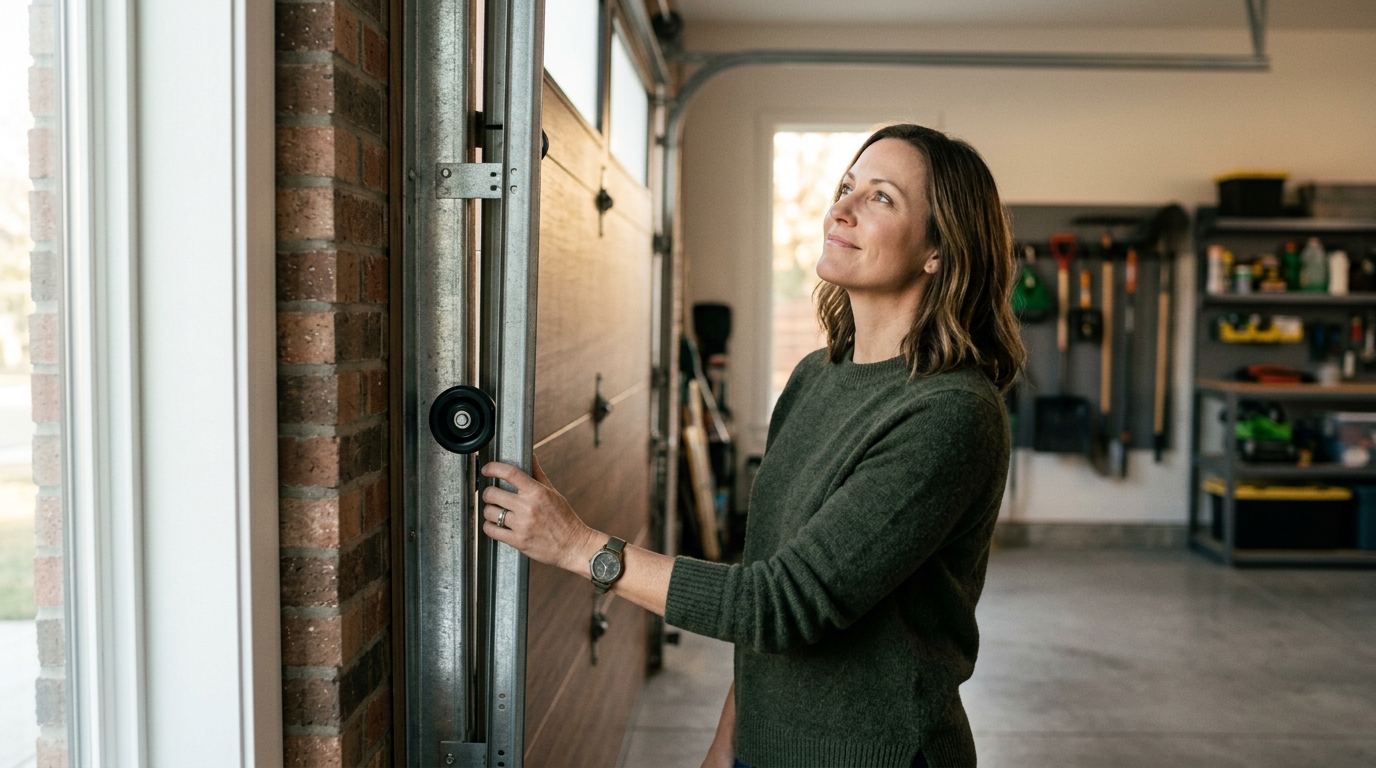
Realigning your garage door tracks reduces squeaking and grinding by restoring the precise geometric path required for smooth roller movement. When tracks are bent or loose, rollers scrape against metal edges instead of gliding freely, creating friction that generates loud, abrasive sounds. Correcting this alignment eliminates the physical contact that causes the noise and prevents long-term wear on your door system.
The Physics of Track Misalignment
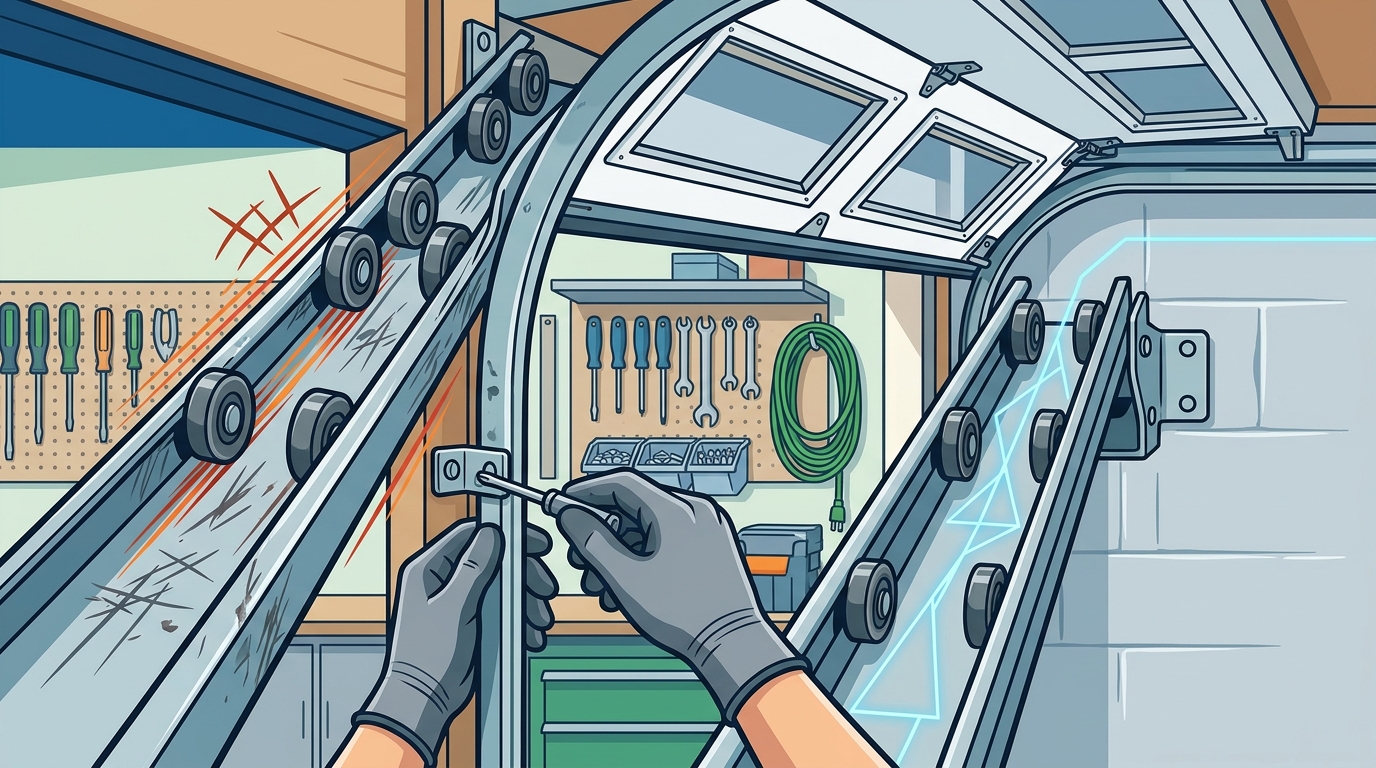
Garage door tracks are engineered to provide a continuous, smooth channel for the rollers to travel along. A garage door track is a structural component that guides the door's vertical and horizontal movement. When a track shifts even slightly out of position, the rollers no longer sit in the center of the channel. This misalignment forces the metal or nylon wheels to press against the inner or outer edges of the track.
This constant contact creates high levels of friction. As the door moves, the rollers grind against the steel track, producing the characteristic scraping or squeaking sounds. The vibration from this friction can also cause the track bolts to loosen further over time, creating a cycle of worsening misalignment and increasing noise levels.
Identifying the Source of the Noise
Before attempting any adjustments, it is crucial to confirm that the tracks are the source of the noise. Grinding sounds typically originate from the points where the rollers interact with the track. Squeaking may come from the hinges, but if the sound is a harsh, metallic scrape, the tracks are likely the culprit. You can visually inspect the tracks for any visible bends, dents, or gaps between the track and the wall or ceiling.
Uneven door movement is another strong indicator. If one side of the door appears higher than the other or if the door shakes as it moves, the tracks are likely misaligned. This unevenness puts extra strain on the opener and the springs, which can lead to more serious mechanical failures if left unaddressed.
Safe Homeowner Checks for Alignment
While major track repairs should be handled by professionals, homeowners can perform basic checks to assess alignment. Start by ensuring the door is fully closed and the opener is disconnected. Use a level to check the vertical tracks. The tracks should be perfectly plumb, meaning they are straight up and down. Any deviation from vertical will cause the rollers to bind against the track edges.
Check the horizontal tracks at the top of the door opening. These tracks should be level and parallel to each other. If you find that the tracks are loose, you can gently tighten the mounting bolts. However, if the tracks are bent, do not attempt to hammer them back into place. Forcing a bent track can cause further damage and make the problem worse. In these cases, professional realignment is necessary.
Why Professional Realignment is Essential
Garage door tracks operate under significant tension and must be aligned with millimeter precision. A professional technician has the specialized tools and experience to safely adjust the tracks without causing additional damage. They can identify subtle misalignments that are not visible to the untrained eye. Proper realignment ensures that the rollers glide smoothly, eliminating the grinding and squeaking noises at the source.
Furthermore, a professional can check the condition of the rollers and hinges during the realignment process. Worn rollers can contribute to noise even if the tracks are perfectly aligned. By addressing both the track alignment and the roller condition, a technician can provide a comprehensive solution that restores quiet operation. This approach is far more effective than simply lubricating the tracks, which may only mask the underlying alignment issue.
Preventing Future Track Issues
Once your tracks are realigned, regular maintenance can help prevent future misalignment. Vibration from the door's operation can gradually loosen the track bolts over time. It is a good practice to have a professional inspect the track hardware during annual tune-ups. They can tighten any loose bolts and ensure the tracks remain in proper position. This proactive approach helps maintain the smooth, quiet operation of your garage door system.
Additionally, keeping the tracks clean and free of debris can reduce friction and wear. Dirt and grime can accumulate in the track channels, causing the rollers to drag. Regular cleaning helps ensure that the tracks remain smooth and that the rollers can move freely. By combining proper alignment with routine maintenance, you can extend the life of your garage door and enjoy a quieter home.
Key Takeaways
- Track misalignment forces rollers to scrape against the track edges, causing grinding and squeaking.
- Uneven door movement and visible bends in the tracks are clear signs of alignment issues.
- Homeowners can check track plumb and level with a basic level but should not force bent tracks.
- Professional realignment ensures millimeter precision and addresses underlying hardware issues.
- Regular inspection of track bolts helps prevent vibration from causing future misalignment.
- Combining track realignment with roller replacement provides the most effective noise reduction.
Frequently Asked Questions
Can I realign my garage door tracks myself?
You can perform basic checks and tighten loose bolts, but you should not attempt to straighten bent tracks. Professional realignment is recommended for any significant misalignment to ensure safety and precision.
Why does my garage door squeak even after lubrication?
If lubrication does not stop the squeaking, the tracks may be misaligned. The rollers are likely scraping against the track edges, which requires realignment rather than just lubrication.
How often should I check my garage door track alignment?
It is best to have a professional inspect the track alignment during annual tune-ups. You can also visually check for any obvious bends or loose bolts on a regular basis.
What tools are needed to check track alignment?
A standard level is sufficient to check if the vertical tracks are plumb and the horizontal tracks are level. A wrench may be needed to tighten loose mounting bolts.
Is it dangerous to operate a misaligned garage door?
Yes, a misaligned door can put extra strain on the opener and springs, potentially leading to cable failure or the door coming off the tracks. It is safer to stop using the door until it is professionally inspected.
Conclusion
Realigning your garage door tracks is a critical step in eliminating persistent grinding and squeaking noises. By restoring the precise path for your rollers, you reduce friction and prevent long-term damage to your door system. For homeowners in the Boise area, Garage Door Store Boise offers expert track realignment and comprehensive repair services to ensure your door operates quietly and safely.