
Which Garage Door Tune-Up Method Suits Noisy Operation Better Than a Standard Inspection?
For a homeowner dealing with a noisy garage door, a targeted tune-up focusing on hardware tightening, lubrication, and roller replacement is significantly more effective than a standard visual inspection. A standard inspection often identifies obvious damage but fails to address the friction points causing the noise. This guide explains why specific mechanical adjustments outperform basic checks and how to implement them for a quieter, safer system.
Hardware Tightening: The Foundation of Quiet Operation
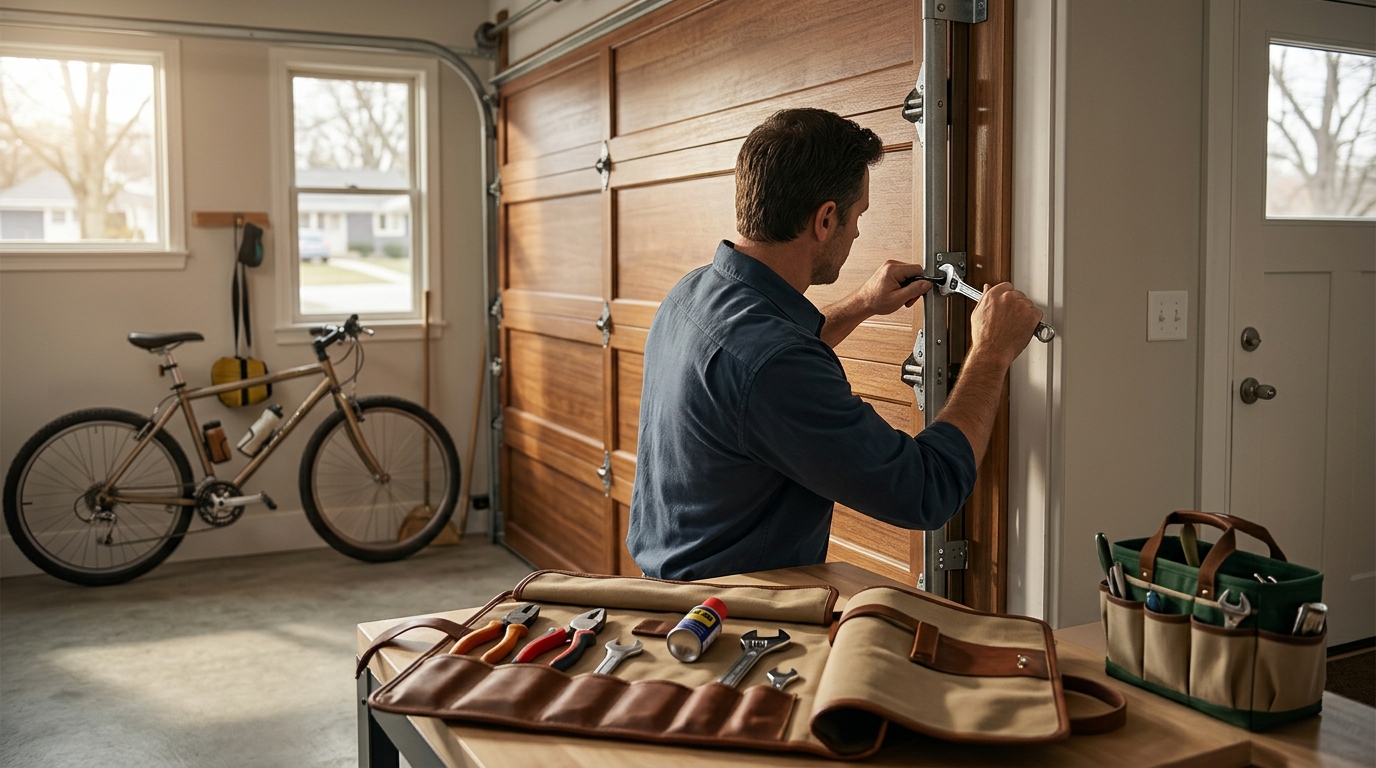
Loose hardware is the most common cause of rattling and banging in garage door systems. Hardware tightening is the process of securing all bolts, nuts, and brackets that hold the door panels, tracks, and opener together. Over time, the constant vibration from opening and closing the door causes these fasteners to back out. When a bolt is loose, the metal components shift slightly with every movement, creating a metallic clatter that is often mistaken for a failing motor.
Homeowners should prioritize the track brackets first. These are the metal plates that attach the vertical tracks to the wall studs. If these are loose, the entire track assembly can vibrate against the wall. Next, inspect the bolts that connect the door panels to the hinges. A loose hinge bolt allows the panel to flex, creating a loud thud when the door reaches the top or bottom of its travel. Tightening these components is a low-cost, high-impact fix that often resolves 50% of noise complaints without replacing any parts.
Identifying Loose Fasteners
Look for visible gaps between the track and the wall bracket. You can also test for looseness by gently pushing on the track; if it moves, the bolts need tightening. Use a socket wrench to snug the bolts, but avoid over-tightening, which can strip the threads in the drywall or wood studs.
Lubrication and Adjustment: Reducing Friction
Friction is the enemy of quiet operation. Lubrication is the application of specialized oils or greases to moving parts to reduce resistance and wear. A standard inspection might note that a door is "dry," but it rarely addresses the specific type of lubricant needed for different components. Using the wrong lubricant, such as WD-40, can actually make noise worse by attracting dust and drying out quickly.
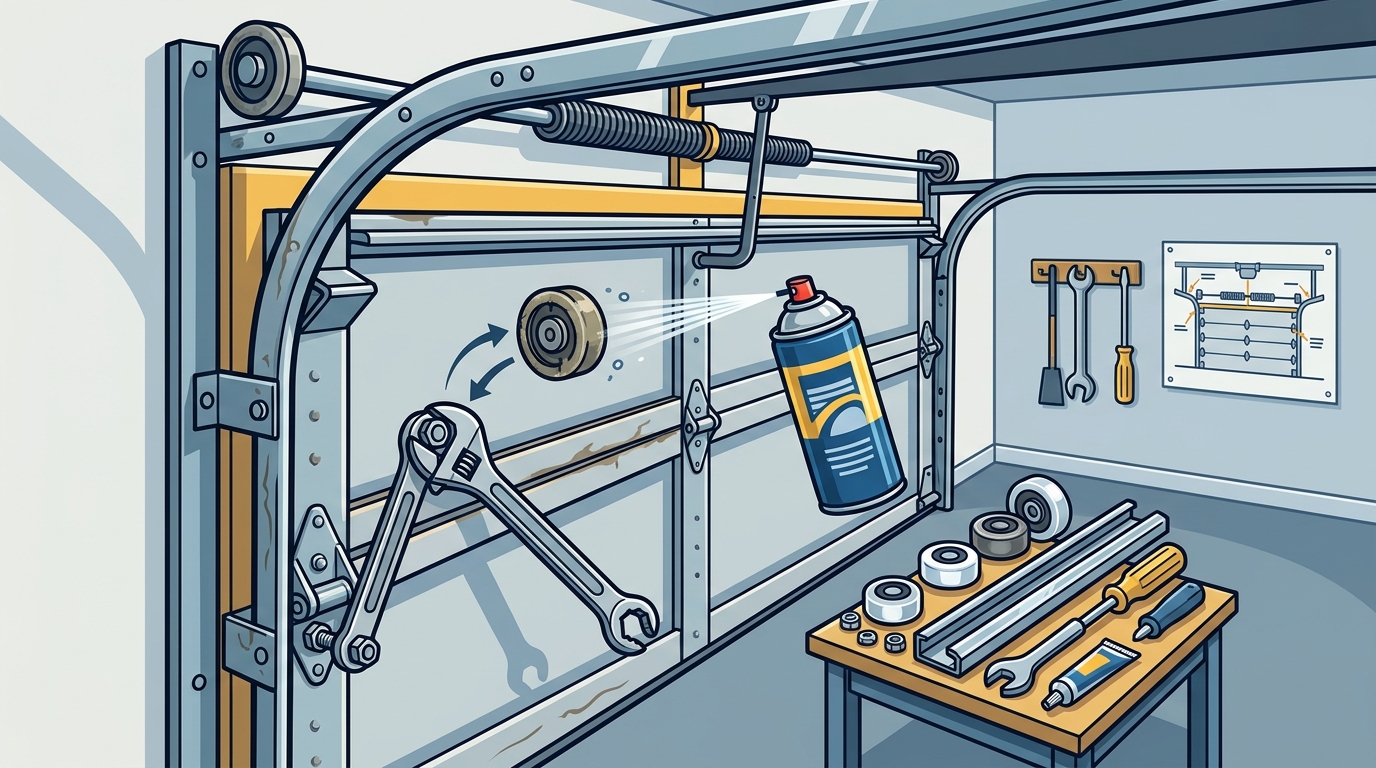
For a noisy door, you must lubricate the hinges, rollers, and the spring system. Hinges should receive a light coat of white lithium grease, which stays in place and does not drip. Rollers require a silicone-based lubricant to ensure smooth travel along the track. The springs, which are under high tension, need a specific garage door spring lubricant. Proper lubrication not only reduces noise but also extends the lifespan of the components by preventing metal-on-metal grinding.
Choosing the Right Lubricant
Avoid petroleum-based oils that can degrade rubber seals. White lithium grease is ideal for metal-on-metal contact points like hinges and springs. Silicone spray is best for rollers and tracks. Apply lubricant sparingly; excess oil will drip onto the floor and attract dirt, creating a gritty paste that increases friction and noise.
Nylon Roller Replacement: The Silent Upgrade
Many older garage doors come equipped with steel rollers. While durable, steel rollers are inherently noisy because they roll on metal tracks. Nylon roller replacement is the single most effective upgrade for reducing noise. Nylon is a softer material that absorbs vibration and does not create the same metallic ringing as steel. Replacing steel rollers with nylon ones can reduce operational noise by up to 50%.
This is not just a cosmetic fix; it is a functional improvement. Nylon rollers are lighter than steel, which reduces the load on the garage door opener motor. A lighter load means the motor works less hard, resulting in less strain and less noise from the opener itself. If your door is noisy, check the material of your current rollers. If they are steel, upgrading to nylon is the best investment you can make for a quieter home.
Steel vs. Nylon Rollers
Steel rollers are stronger and better suited for very heavy commercial doors. However, for residential doors, the noise reduction from nylon rollers far outweighs the slight difference in strength. Nylon rollers are also more resistant to rust, which is a common issue in humid climates or coastal areas.
Roller Replacement: Addressing Wear and Tear
Even nylon rollers wear out over time. Roller replacement is the process of removing old, damaged rollers and installing new ones. Worn rollers often have flat spots, cracks, or excessive play in the axle. When a roller is worn, it does not roll smoothly; it drags or skips, creating a grinding or scraping noise. This noise is distinct from the rattling of loose hardware and the whining of a dry hinge.
Replacing rollers is a more involved task than tightening hardware. It requires removing the door from the tracks, which can be dangerous if the springs are not properly secured. This is why professional service is often recommended for roller replacement. A technician can safely release the tension on the springs, remove the old rollers, and install new ones with the correct alignment. If you hear a grinding noise that persists after lubrication, your rollers are likely worn and need replacement.
Signs of Worn Rollers
Look for visible cracks in the roller material. Check for flat spots where the roller has worn down. If the roller wobbles on its axle, it is time for replacement. Worn rollers can also damage the track, so addressing this issue early prevents more expensive repairs.
Track Alignment: Ensuring Smooth Travel
A misaligned track is a major source of noise and a safety hazard. Track alignment is the adjustment of the vertical and horizontal tracks to ensure they are perfectly straight and parallel. If the tracks are bent or out of alignment, the rollers will not travel smoothly. Instead, they will scrape against the edges of the track, creating a loud scraping or grinding noise. This noise is often accompanied by the door sticking or moving unevenly.
Track alignment is a critical part of a comprehensive tune-up. A standard inspection might note that the tracks are "slightly bent," but it rarely involves the precise adjustments needed to fix the issue. Correcting track alignment requires specialized tools and expertise. A professional can use a level and a tape measure to ensure the tracks are plumb and square. They can also adjust the track brackets to ensure the tracks are the correct distance apart. Proper alignment ensures that the door moves smoothly and quietly, reducing wear on the rollers and opener.
Why Alignment Matters
Misaligned tracks put uneven stress on the door panels and hinges. This can lead to premature failure of the door itself. It also causes the opener to work harder, which can lead to motor burnout. If your door is noisy and also seems to be sticking or moving unevenly, track alignment is likely the root cause.
Comparison of Tune-Up Methods
| Method | Primary Noise Addressed | Difficulty Level | Cost Impact |
|---|---|---|---|
| Hardware Tightening | Rattling, Banging | Low | Minimal |
| Lubrication | Squeaking, Whining | Low | Low |
| Nylon Roller Upgrade | Metallic Ringing | Medium | Medium |
| Roller Replacement | Grinding, Scraping | High | Medium to High |
| Track Alignment | Scraping, Sticking | High | High |
Key Takeaways
- Hardware tightening is the first step in addressing noisy operation and is often the most effective low-cost fix.
- Using the correct lubricant, such as white lithium grease for hinges, is crucial for reducing friction and noise.
- Upgrading from steel to nylon rollers is the single best way to reduce metallic ringing and overall operational noise.
- Worn rollers cause grinding and scraping noises and should be replaced to prevent track damage.
- Track alignment is a critical safety and noise issue that requires professional expertise to correct properly.
- A standard inspection is insufficient for noisy doors; a targeted tune-up addressing specific mechanical issues is required.
- Regular maintenance, including lubrication and hardware checks, can prevent most noise issues before they become major repairs.
- Professional service is recommended for roller replacement and track alignment due to the high tension and safety risks involved.
Frequently Asked Questions
Why is my garage door noisy even though it was recently inspected?
A standard inspection often focuses on safety and obvious damage, not the subtle friction points that cause noise. A targeted tune-up that addresses lubrication, hardware, and rollers is needed to resolve noise issues.
Can I replace my garage door rollers myself?
While possible, roller replacement involves working with high-tension springs, which can be dangerous. It is recommended to hire a professional for this task to ensure safety and proper alignment.
What is the best lubricant for garage door hinges?
White lithium grease is the best lubricant for garage door hinges. It stays in place, does not drip, and provides long-lasting protection against friction and rust.
How often should I lubricate my garage door?
You should lubricate your garage door at least once a year. If you live in a dusty or humid environment, you may need to lubricate more frequently, such as every six months.
Are nylon rollers better than steel rollers?
For residential doors, nylon rollers are generally better because they are quieter and lighter. Steel rollers are stronger but noisier and are typically used for commercial applications.
What does a misaligned track sound like?
A misaligned track often creates a loud scraping or grinding noise as the rollers drag against the edges of the track. The door may also stick or move unevenly.
Can loose hardware cause my garage door to fall?
Loose hardware can compromise the structural integrity of the door system. While it is unlikely to cause the door to fall immediately, it can lead to track detachment or hinge failure, which are serious safety hazards.
How much does a professional garage door tune-up cost?
Costs vary by region and the extent of the work required. A basic tune-up may cost less than a full roller replacement or track alignment. It is best to get a quote from a local professional for an accurate estimate.