
Which Garage Door Tune-Up Method Suits Noisy Operation Better Than a Standard Inspection?
For homeowners in the Treasure Valley experiencing noisy garage door operation, a targeted mechanical tune-up focusing on lubrication, hardware tightening, and roller replacement is significantly more effective than a standard visual inspection. A standard inspection often identifies visible wear but fails to address the friction points causing the noise. This guide explains why a hands-on mechanical adjustment is the superior solution for silencing your door. We will cover the specific steps involved in lubrication, the importance of tightening loose hardware, and the benefits of replacing worn nylon rollers to restore quiet, smooth operation.
Lubrication and Adjustment
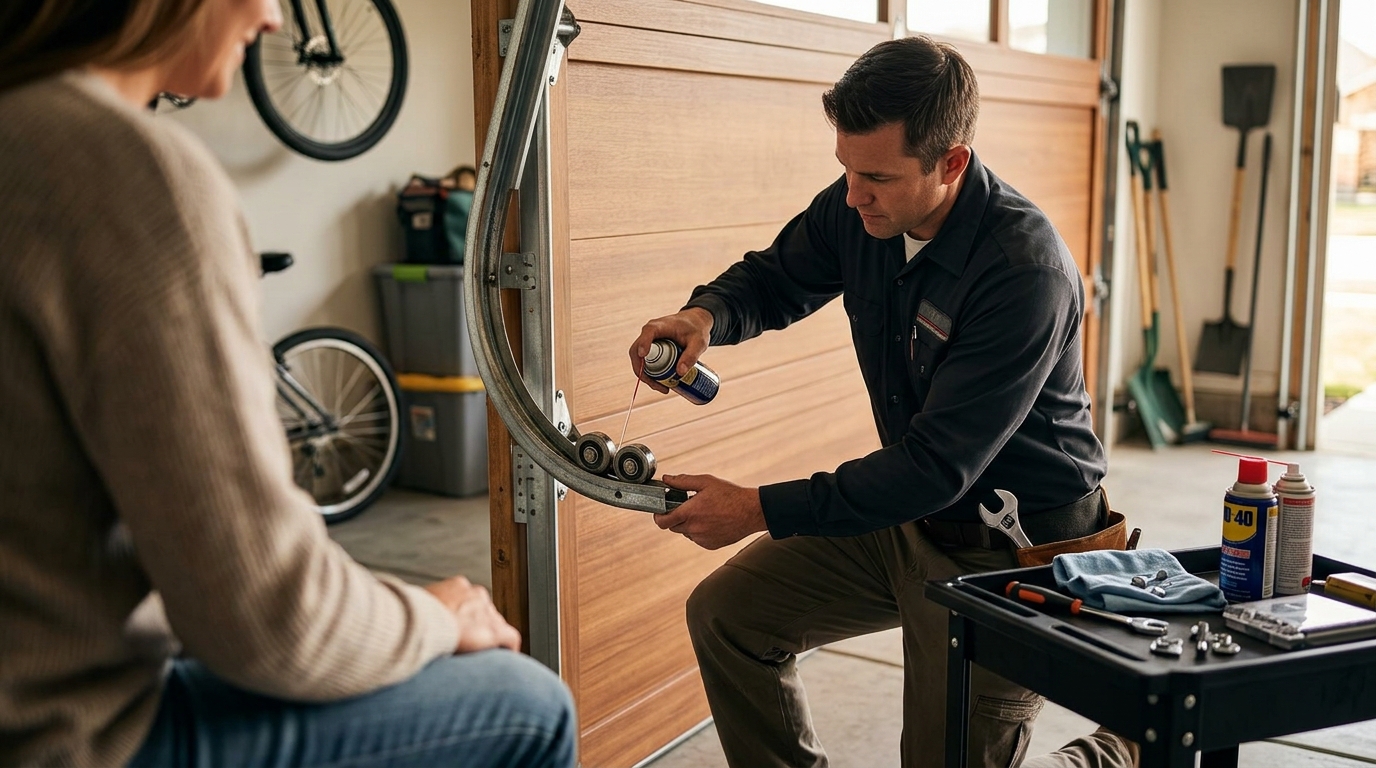
Friction is the primary source of noise in a garage door system. When metal components rub against each other without adequate lubrication, they create grinding, squeaking, or screeching sounds. A standard inspection might note that the door is "noisy" but often stops there. A proper tune-up begins with a comprehensive lubrication protocol. This involves applying a specific garage door lubricant to the hinges, rollers, and springs. It is critical to use a silicone-based or lithium-based lubricant designed for garage doors. Standard household oils or WD-40 are not recommended as they can attract dust and degrade rubber seals over time.
Targeting the Hinges and Rollers
The hinges connect the door panels and are a major noise generator. Over time, the grease inside the hinge pins dries out. A technician will remove the hinge pins, clean the old grease, and apply fresh lubricant before reinserting them. Similarly, the rollers that travel along the tracks need lubrication at their axles. This reduces the drag that causes the door to sound heavy and labored during operation.
Spring Tension and Balance Adjustment
Hardware Tightening
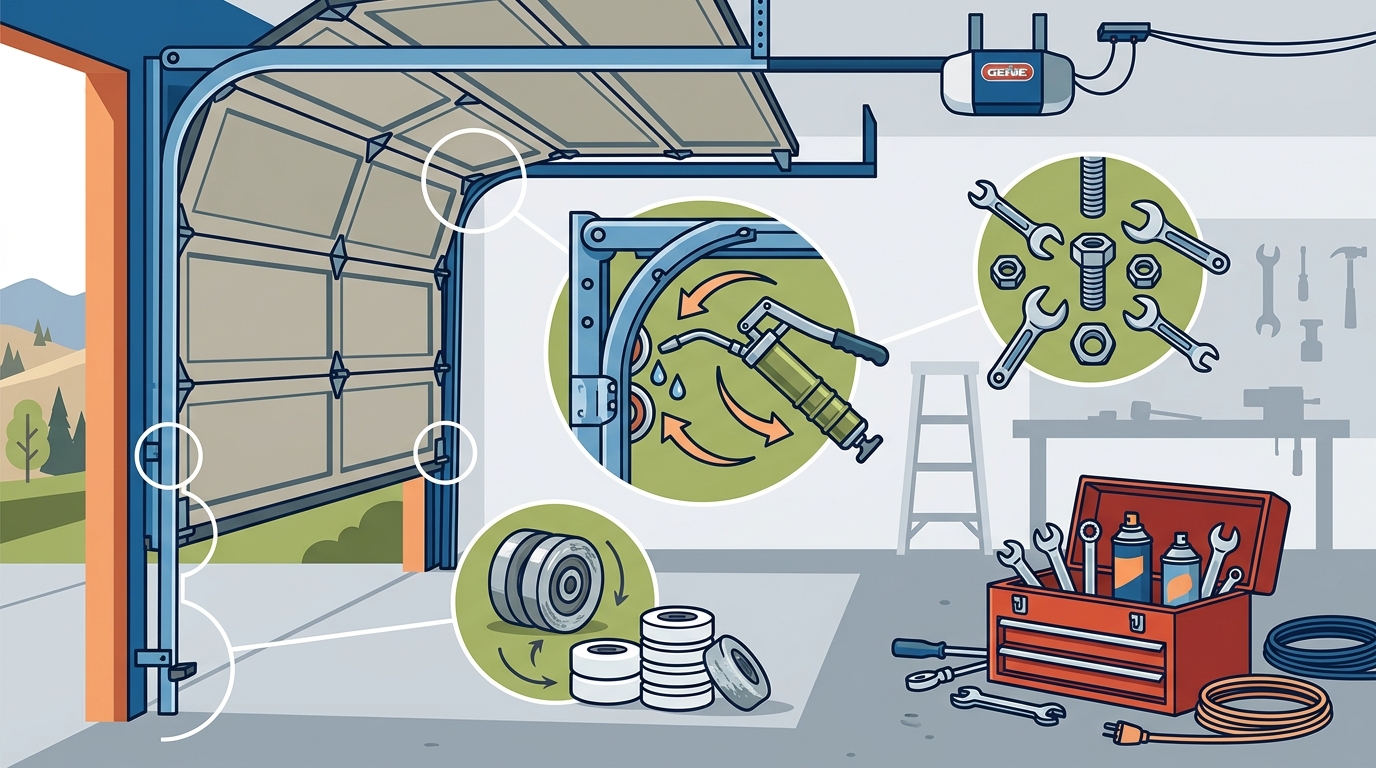
Vibration is an inherent part of garage door operation. Every time the door opens and closes, the entire system vibrates. Over months and years, this vibration causes bolts, screws, and brackets to loosen. Loose hardware creates a rattling or banging noise that is often mistaken for a broken part. A standard inspection may look at the door from the outside and miss these internal loose connections. A detailed tune-up involves a systematic tightening of all hardware components.
Track Brackets and Mounting Bolts
The tracks that guide the door are mounted to the wall and ceiling with brackets. If these brackets loosen, the tracks can shift slightly, causing the rollers to hit the metal edges of the track. This results in a loud clanking sound. The technician will check every bracket along the length of the track and tighten the mounting bolts to the manufacturer's specifications. This ensures the tracks remain rigid and aligned, preventing the rollers from making contact with the track edges.
Opener Mounting and Chain Tension
The garage door opener itself is a source of noise if not properly secured. The opener is mounted to the ceiling with a bracket. If this bracket is loose, the entire unit can rattle against the ceiling joists. Additionally, for chain-drive openers, the chain tension must be correct. A loose chain will slap against the rail, creating a loud clacking sound. Tightening the opener mounting hardware and adjusting the chain tension are critical steps in a noise-reduction tune-up. These adjustments are often overlooked in basic inspections but are vital for a quiet system.
Nylon Roller Replacement
Rollers are the components that roll along the tracks. Most modern garage doors use nylon rollers because they are quieter than steel rollers. However, nylon is a wear item. Over time, the nylon material wears down, becomes chipped, or cracks. Worn rollers do not roll smoothly; they drag and grind against the track. This creates a persistent grinding or squealing noise that lubrication alone cannot fix. A standard inspection might note that the rollers are "worn" but may not recommend immediate replacement if the door is still functioning. A proactive tune-up for noisy operation prioritizes the replacement of these worn components.
Identifying Worn Rollers
Benefits of New Nylon Rollers
New nylon rollers provide a significant reduction in noise. They roll smoothly with minimal friction, resulting in a quiet, almost silent operation. They also reduce the load on the opener motor, which can extend the life of the motor. For homeowners in Boise, where temperature swings can affect plastic and nylon components, regular roller replacement is a key part of maintenance. By replacing worn rollers during a tune-up, you address the root cause of the noise rather than just masking it with lubricant.
Comparison: Standard Inspection vs. Mechanical Tune-Up
Understanding the difference between a standard inspection and a mechanical tune-up helps homeowners make informed decisions about their garage door maintenance. The table below highlights the key differences in scope and outcomes for addressing noisy operation.
| Feature | Standard Inspection | Mechanical Tune-Up |
|---|---|---|
| Primary Focus | Visual assessment of door condition | Hands-on adjustment and component replacement |
| Noise Diagnosis | Identifies that noise is present | Identifies specific source of friction or vibration |
| Lubrication | May recommend lubrication | Applies lubricant to all moving parts |
| Hardware | Checks for visible loose parts | Tightens all bolts, brackets, and chain tension |
| Rollers | Notes wear if visible | Replaces worn nylon rollers to eliminate grinding |
| Balance Test | Often skipped or basic | Full balance test and spring tension adjustment |
| Outcome for Noise | May not resolve the issue | Significantly reduces or eliminates noise |
Key Takeaways
- A standard inspection is often insufficient for resolving noisy garage door operation because it lacks hands-on mechanical adjustments.
- Lubrication of hinges, rollers, and springs is the first step in reducing friction-related noise.
- Loose hardware, including track brackets and opener mounts, is a common cause of rattling and banging sounds.
- Worn nylon rollers should be replaced rather than just lubricated to eliminate grinding noises.
- Spring tension and door balance must be tested and adjusted to prevent motor strain and humming.
- Using the correct silicone-based lubricant is critical; household oils can attract dust and cause more noise.
- Regular tune-ups extend the life of the opener motor and prevent costly repairs.
- Professional service is recommended for spring adjustments due to the high tension and safety risks involved.
Frequently Asked Questions
Why is my garage door making a grinding noise?
A grinding noise is typically caused by worn rollers or lack of lubrication in the hinges. The metal is rubbing against the track or other metal parts. Replacing the rollers and applying proper lubricant usually resolves this issue.
Can I lubricate my garage door myself?
Yes, you can lubricate the hinges and rollers yourself using a silicone-based garage door lubricant. However, you should not attempt to adjust the spring tension or replace the rollers yourself, as these tasks require specialized tools and knowledge.
How often should I have a garage door tune-up?
It is recommended to have a professional tune-up once a year. This ensures that all components are lubricated, hardware is tightened, and the door is balanced. In areas with extreme temperature changes, like Boise, annual maintenance is especially important.
What is the difference between a tune-up and a repair?
A tune-up is a preventive maintenance service that adjusts and lubricates the system to ensure optimal performance. A repair is performed when a component is broken or damaged and needs to be fixed or replaced. A tune-up can often prevent the need for a major repair.
Are nylon rollers better than steel rollers?
Yes, nylon rollers are generally quieter and smoother than steel rollers. They are the preferred choice for residential garage doors where noise reduction is a priority. Steel rollers are more durable but can be noisier.
Will a tune-up fix a door that is off track?
No, a door that is off track requires a repair, not a tune-up. A tune-up assumes the door is functioning correctly but is noisy or inefficient. If the door is off track, it needs to be realigned and the tracks adjusted, which is a repair service.
How much does a garage door tune-up cost?
Costs vary depending on the service provider and the condition of the door. A standard tune-up typically includes lubrication, hardware tightening, and a balance test. For specific pricing in the Boise area, it is best to request a quote from a local professional.
Can I use WD-40 on my garage door?
No, you should not use WD-40 or other household oils on your garage door. These products can attract dust and dirt, which can clog the mechanisms and cause more noise. Use a lubricant specifically designed for garage doors.
Conclusion
If your garage door is noisy, a standard inspection is not enough. You need a mechanical tune-up that addresses the root causes of the noise. This includes thorough lubrication, tightening of all hardware, and replacement of worn nylon rollers. These steps ensure that your door operates smoothly and quietly, extending the life of your system. For homeowners in the Treasure Valley, Garage Door Store Boise offers expert tune-up services that go beyond basic inspections. Our technicians are trained to identify and resolve the specific issues causing noise, ensuring your garage door runs quietly and reliably. Contact us today to schedule your tune-up and enjoy a quieter home.