
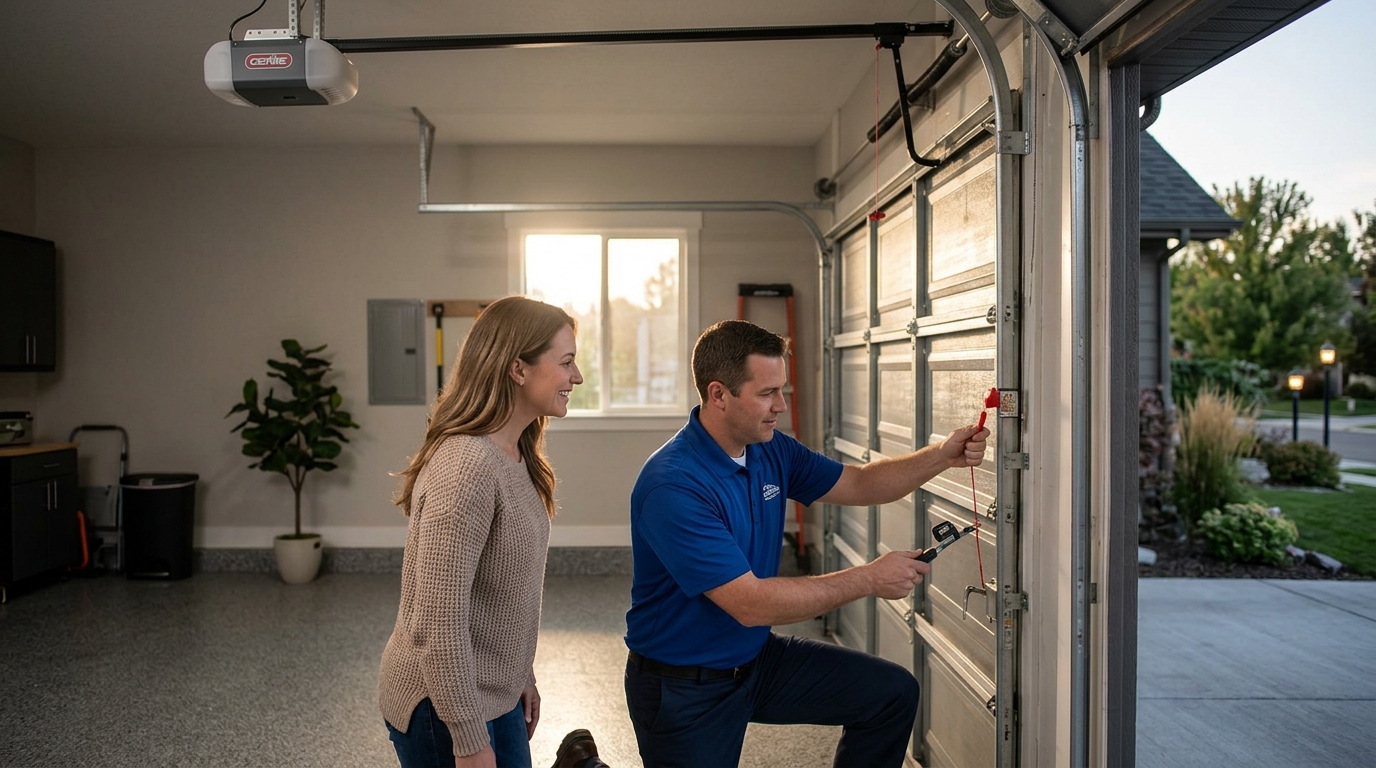
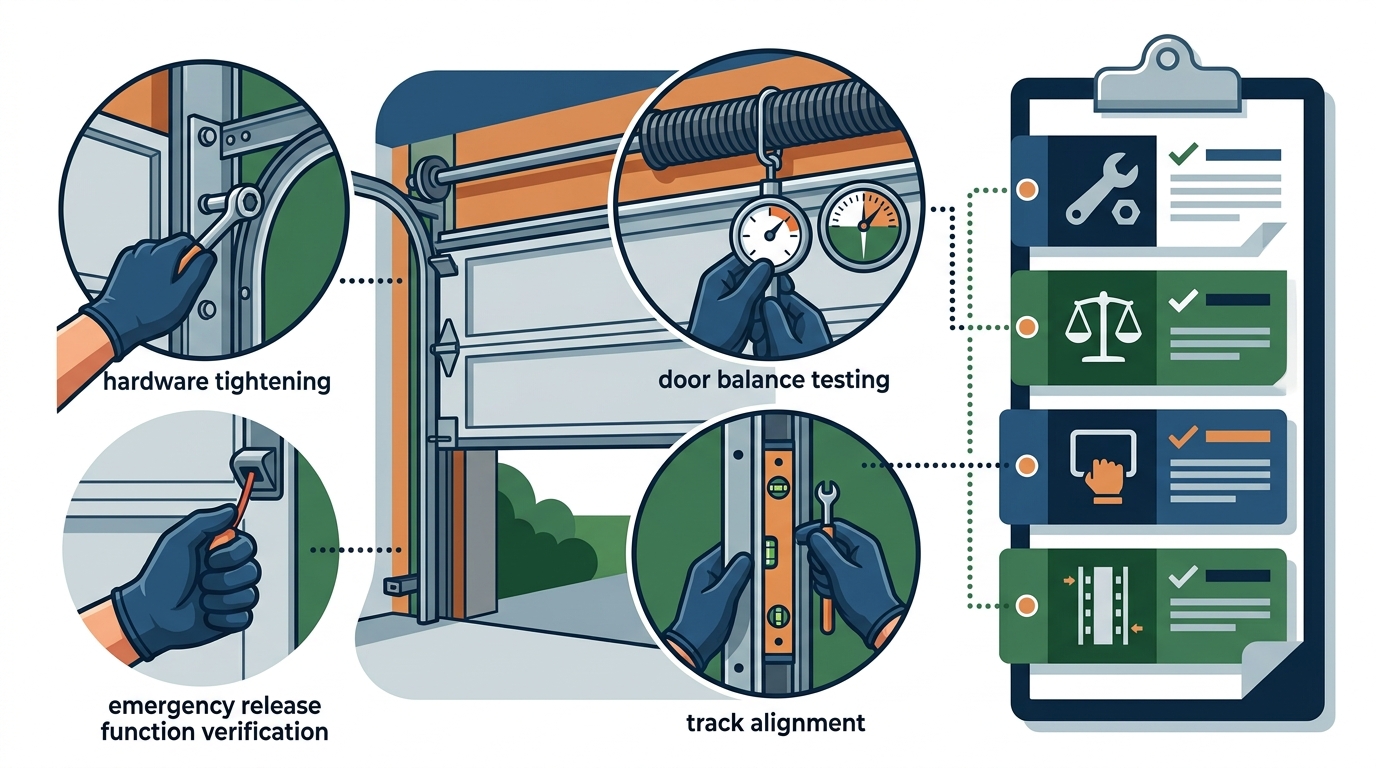
A professional garage door tune-up package includes critical safety checks such as door balance testing, hardware tightening, emergency release function verification, and track alignment. These inspections ensure your system operates safely and prevents dangerous malfunctions. This guide details the specific safety features included in a professional tune-up and explains why each step matters for your home's security.
Door Balance Testing
Door balance testing is the process of verifying that the springs counterbalance the weight of the door evenly. A balanced door is the single most important safety feature in any garage door system. When a door is unbalanced, the motor works harder, leading to premature wear and potential failure. Garage Door Store Boise technicians perform this test by disconnecting the opener and manually lifting the door to the halfway point. If the door stays in place, the springs are correctly balanced. If it drops or rises, the spring tension needs adjustment. This step prevents the door from falling unexpectedly, which is a major safety hazard.
Why Balance Matters for Safety
Garage doors are heavy, often weighing between 150 and 300 pounds. The springs are under extreme tension to support this weight. If the balance is off, the door can become difficult to operate manually during a power outage. It can also put excessive strain on the opener motor, causing it to overheat. Proper balance ensures that the door moves smoothly and safely, reducing the risk of injury to anyone in the garage.
Hardware Tightening
Hardware tightening is the inspection and adjustment of all bolts, nuts, and screws on the garage door system. Vibration from daily use can loosen these components over time. Loose hardware can cause the door to wobble, making noise, or even detach from the tracks. Technicians check the track brackets, roller attachments, and opener mounting points. They ensure every fastener is secure and that no components are worn out. This step is crucial because a loose track bracket can cause the door to derail, which is a serious safety risk.
Common Hardware Issues
One of the most common issues is loose track brackets. These brackets hold the tracks to the wall and ceiling. If they loosen, the tracks can shift, causing the rollers to bind. Another issue is loose roller bolts. If a roller bolt loosens, the roller can fall out of the track, jamming the door. Regular hardware tightening prevents these issues and keeps the door operating smoothly.
Emergency Release Function
The emergency release function is a manual mechanism that allows you to disconnect the door from the opener during a power outage or malfunction. This feature is critical for safety because it ensures you can always access your garage, even if the motor fails. Technicians test this function by pulling the release cord and manually operating the door. They ensure the cord moves freely and that the door can be opened and closed by hand. They also check that the release mechanism re-engages properly when the power is restored. This test ensures that you are not locked out of your home in an emergency.
Testing the Release Mechanism
During a tune-up, the technician will pull the red emergency release cord. They will then lift the door manually to ensure it moves smoothly. They will also check that the door does not stick or bind when disconnected from the opener. This test is important because a stuck release mechanism can make it impossible to open the door manually. It can also cause the door to fall if the springs are not balanced correctly.
Track Alignment
Track alignment is the process of ensuring that the metal tracks guiding the door rollers are straight and properly positioned. Misaligned tracks can cause the door to bind, make loud noises, or even derail. Technicians use a level and a tape measure to check the alignment of both the vertical and horizontal tracks. They adjust the track brackets as needed to ensure the tracks are parallel and level. Proper track alignment is essential for smooth operation and prevents the rollers from wearing out prematurely. It also reduces the risk of the door coming off the tracks, which is a dangerous situation.
Signs of Misaligned Tracks
If your garage door is making loud grinding or scraping noises, the tracks may be misaligned. You may also notice that the door is not moving smoothly or is sticking at certain points. In severe cases, the door may come off the tracks entirely. Regular track alignment checks prevent these issues and keep your door operating safely.
Safety Reversal and Sensors
Importance of Sensor Testing
Photo-eye sensors are located near the floor on both sides of the door. They emit an invisible beam that, if blocked, signals the opener to stop and reverse. If the sensors are misaligned or dirty, they may not work correctly. Technicians clean the sensor lenses and adjust their alignment to ensure they are facing each other properly. This step is crucial for preventing accidents and ensuring compliance with safety standards.
Tune-Up vs. Repair Comparison
Understanding the difference between a tune-up and a repair helps you decide when to call for service. A tune-up is a preventive maintenance service, while a repair is a corrective action for a specific problem. The table below summarizes the key differences.
| Feature | Tune-Up | Repair |
|---|---|---|
| Purpose | Preventive maintenance | Corrective action |
| Timing | Regular schedule (e.g., annually) | When a problem occurs |
| Scope | Comprehensive inspection of all components | Focus on the specific broken part |
| Cost | Fixed price | Variable based on parts and labor |
| Benefit | Extends system life, prevents breakdowns | Restores function to a broken system |
Key Takeaways
- Door balance testing ensures the springs counterbalance the door weight, preventing falls and motor strain.
- Hardware tightening prevents loose components from causing derailments or noise.
- The emergency release function allows manual operation during power outages or malfunctions.
- Track alignment ensures smooth roller movement and prevents binding or derailing.
- Safety reversal and sensors stop the door if it encounters an obstacle, preventing injuries.
- A tune-up is a preventive service that extends the life of your garage door system.
- Regular tune-ups are more cost-effective than emergency repairs.
- Professional technicians have the tools and expertise to perform these safety checks correctly.
Frequently Asked Questions
How often should I get a garage door tune-up?
It is recommended to get a garage door tune-up once a year. This ensures that all safety features are functioning correctly and that the system is operating smoothly. If you notice any issues, such as noise or difficulty opening, you should schedule a tune-up sooner.
What is the most important safety feature in a garage door tune-up?
Can I perform a garage door tune-up myself?
While you can perform some basic checks, such as cleaning the sensors, it is not recommended to perform a full tune-up yourself. Garage door springs are under extreme tension and can cause serious injury if handled incorrectly. It is best to hire a professional technician for a comprehensive tune-up.
What happens if the emergency release function is not working?
If the emergency release function is not working, you may be unable to open the door manually during a power outage. This can lock you out of your home. It is important to have the release mechanism repaired as soon as possible.
How much does a garage door tune-up cost?
The cost of a garage door tune-up varies depending on the provider and the scope of the service. It is best to get a quote from a local professional. Garage Door Store Boise offers competitive pricing for their tune-up services.
What are the signs that my garage door needs a tune-up?
Signs that your garage door needs a tune-up include loud noises, difficulty opening or closing, slow operation, and visible wear on the springs or cables. If you notice any of these signs, it is time to schedule a tune-up.
Conclusion
A professional garage door tune-up is an essential investment in your home's safety and security. By including critical safety features such as door balance testing, hardware tightening, emergency release function verification, and track alignment, a tune-up ensures that your system operates reliably and safely. Garage Door Store Boise provides comprehensive tune-up services for homeowners in the Boise, Idaho area. Their experienced technicians perform thorough inspections to identify and address potential issues before they become major problems. To schedule a tune-up or learn more about our services, contact Garage Door Store Boise today.